Influencers Go Nuclear
The nuclear power lobby invades social media

Supporters of nuclear power want you to think of them as righteous rebels, a persecuted minority whose reasonable voices have been silenced by an overwhelming chorus of anti-science rhetoric.
Nothing could be further from the truth. Nuclear power has been breathlessly promoted by a vast public relations operation for more than 75 years, save for decent intervals following the disasters at Three Mile Island, Chernobyl, and Fukushima. “Our Friend the Atom,” Disney’s 1957 paean to the benefits of radioactivity, is typical:
(Note that Disney recommends a liberal dusting of radioactive isotopes for the nourishment of plants and livestock.)
Today’s propaganda, which is accelerating in aid of Trump’s Warp Speed nuclear program, is more shrill and widespread than ever. On YouTube, for example, a search for “nuclear power” yields scores of pro-nuke videos; one must scroll for ages to find anything remotely critical. Kids seeking basic information are slammed with cartoonish propaganda tailored to the perceived tastes of Gens Z and Alpha. There’s a heap of AI-generated slop designed to overwhelm YouTube’s algos, but the most effective salesmen are real people, just like you. Witness Kyle Hill, an Internet “personality” and videogame publicist who promises to “find the secret science in your favorite fandom.”
Hill is actually one of the less egregious products of an all-out publicity campaign intended to to indoctrinate youth via social media. Much of this schlock is generated by DOE — your tax dollars at work — but most of it is concocted by marketing firms hired by the nuclear industry. A network of hip young “influencers” — i.e., online shills who are often surreptitiously compensated for their services — can now be found on TikTok, Twitter, InstaGram, et al., waxing rhapsodic about nukes while preening for the camera.
The Queen of Preen is Isabelle Boemeke, a Brazilian fashion model and TikTok star who talks up nuclear power while shimmying in skintight workout togs.
Boemeke is exceptional in that she doesn’t need to be bankrolled by ruling class cut-outs — i.e., the foundations and NGOs that launder industry funds — since she is herself one of the rulers. When she’s not bumping and grinding as “Isodope, the irreverent digital persona on a mission to make nuclear cool,” she is the trophy wife of multi-billionaire Joe Gebbia, founder of AirBnB. A former DOGE official and close friend of Elon Musk, Gebbia is pleased to shovel millions into various pro-nuke causes.
It’s hard to believe that anyone could be convinced by the infantile bullet points retailed by Boemeke, but the goal here is not rational persuasion but influence. Her persona screams “be like me” while her underlying message is simple: All the cool kids love nuclear power; if you don’t, you you’re a loser.
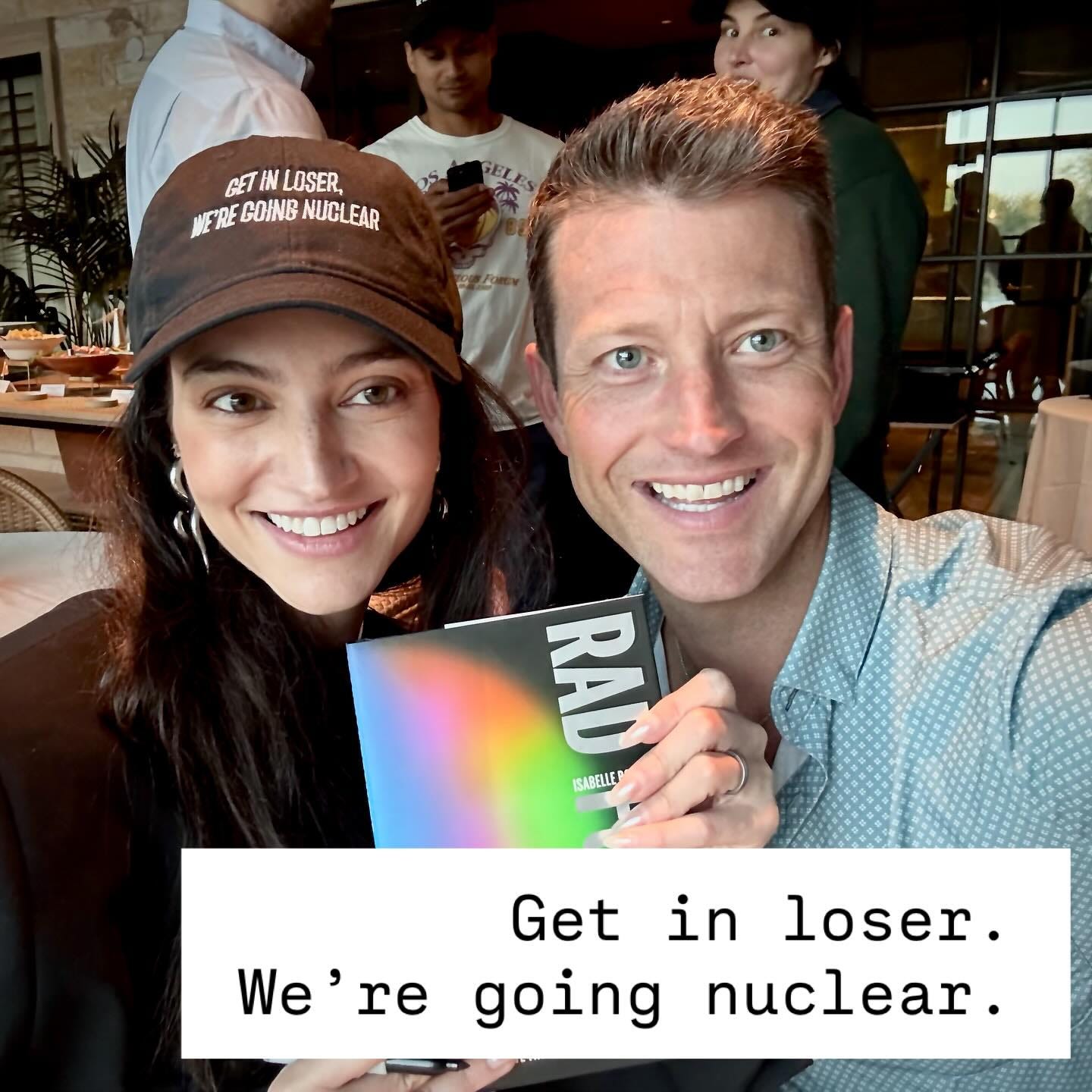
This mean girl-style pressure to conform takes its inspiration from the oleaginous former Energy Secretary Rick Perry, who repeatedly vowed to “make nuclear energy cool again.” To this end, he created the Millennial Nuclear Caucus, which offered recognition, training, and assorted blandishments to “the emerging influencers who are shaping nuclear enterprises and policy.” Industry-controlled NGOs followed suit, sponsoring fellowships and online seminars aimed at recruiting youthful spokespersons.
Mind you, “cool” isn’t the only approach to selling nuclear. Very often influencers adopt a nerdy persona. This is partly because marketers believe that awkwardness and crappy production values convey authenticity. Primarily, however, the nuclear industry needs its corrupt and wildly hazardous activities to be perceived as unthreatening. Affable midwits who remind you of your goofy Uncle Elmer couldn’t possibly be up to anything sinister, could they?
Consider this deliberately dreadful video by Eric Meyer, a failed opera singer who has manufactured a lucrative second career peddling nuke propaganda to Gen-Z:
Or this “fellow kids” performance, courtesy of the Nuclear Energy Institute (NEI):
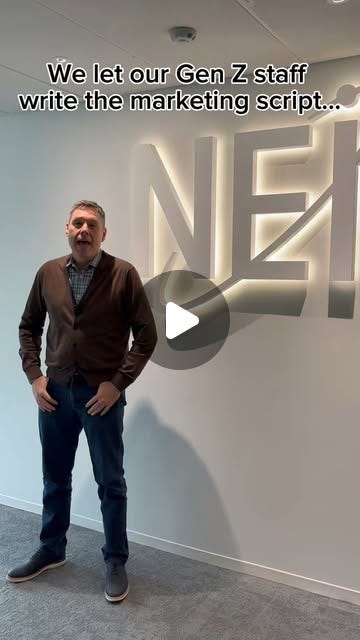
Nothing about these cutesy vids is benign. In both cases, behind the nerdy posturing lurks a sophisticated complex of industry marketing operations.
NEI is a powerful and notoriously deceptive lobbying outfit, funded by such firms as Westinghouse, GE Hitachi, Bechtel, and Palantir. Among other nefarious activities, the NEI ghostwrites op-eds, paying scientists and academics to attach their names to what is essentially marketing copy, and creates misleading ads that have triggered FTC investigations.
Meyer founded Generation Atomic, an NGO that claims to be “building a movement” to achieve “atomic abundance.” The organization declines to disclose its funders, but it is plainly an astroturf operation charged with simulating popular enthusiasm for nuclear power. It trains simpering youngsters as “Nuclear Ambassadors” and sends teams of fresh-faced young women to industry showcases and COP conferences.1 We can’t say for sure who pays for all this, but I note that one of the board members is Patrick O’Brien, Director of Government Affairs and Communications at Holtec International, a giant nuclear waste “disposal” firm so sleazy that it stands out in a uniquely disreputable field.2
What I’ve chosen to highlight today is only a very small part of a sweeping marketing blitzkrieg intended to manufacture consent for exceptionally dangerous policies. Pro-nuke campaigns rarely rely on reasoning or sound evidence. Rather, the industry generates a blizzard of impressionistic factoids that intentionally confuse and disorient the consumer.
Does it work? Apparently so: A recent Gallup survey found that 55% of Americans now approve of nuclear power, the highest level of support since the Fukushima disaster. My interactions with nuke boosters suggest that their views, no matter how fervently held, are founded on little more than a vague sense that nuclear power is somehow “good for the climate” and safer than it used to be due to unspecified “technological advances” — the residue of online propaganda. Hypnotized by their screens, they are easy prey for unscrupulous salesmen. It may take another Fukushima to wake them up.
Presumably it takes no great effort to recruit young “communicators” a time when humanities graduates are virtually unemployable.
Holtec has a long, dirty history of payoffs and tax fraud; recently it was deeply involved in the bribery scams that dismantled Ukraine’s safety regulation apparatus.
safer than it used to be due to unspecified “technological advances” —
This is the narrative I was told by a well meaning comrade so it is especially useful that you provide a rebuttal. Is there any evidence that the current generation of nukes is any safer than those of the past?
Part of the general retardation around the energy issue is that real clean decentralized energy sources have been ruthlessly suppressed for decades as they would eliminate the energy cartels forever and launch humanity into an epoch of abundance.